
AI: The Comedian Guide for Researchers in Unveiling Macroscopic Perspectives in Cell Biology
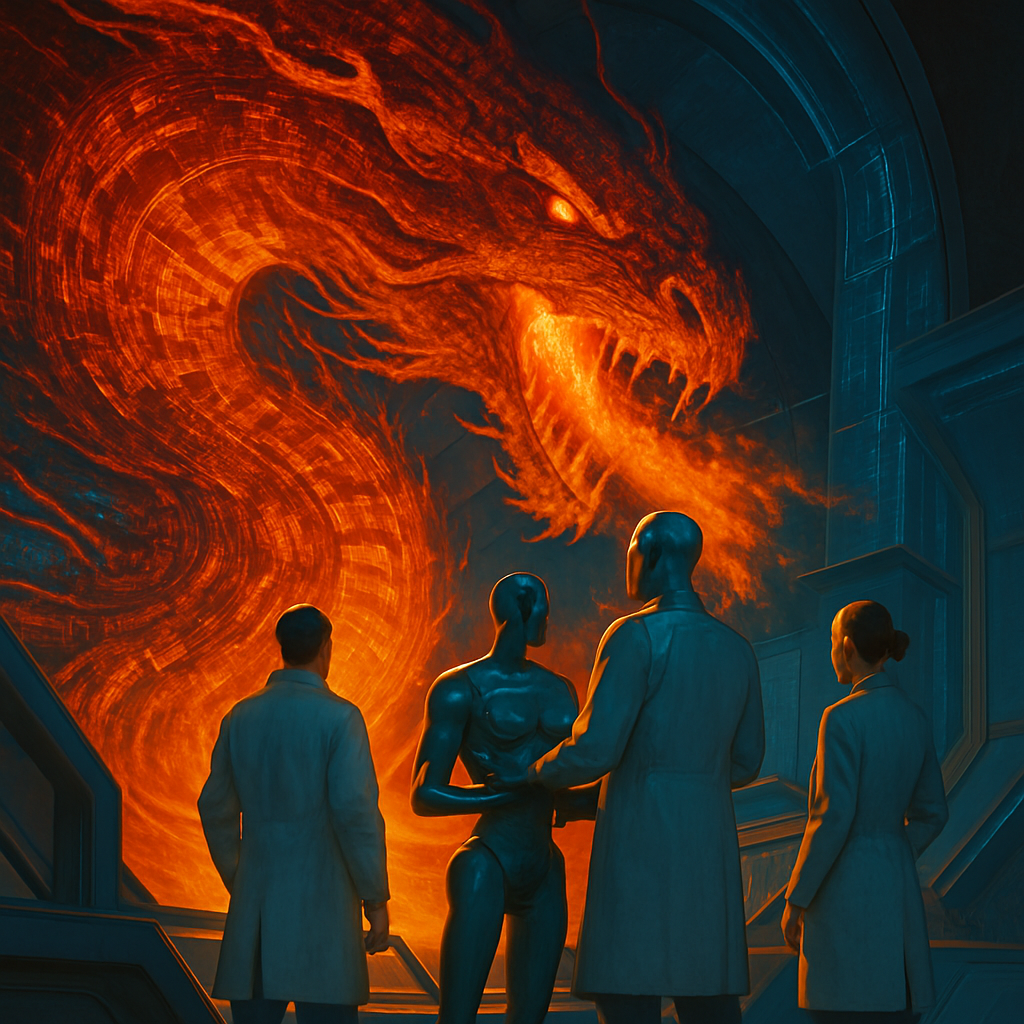
“AI to help researchers see the bigger picture in cell biology”
“As Smaug’s dragon fire demolishes Laketown at the climax of J.R.R. Tolkien’s novel “The Hobbit,” the story’s protagonist, Bilbo Baggins, encourages the human townsfolk to hold on to hope — to wait and watch for an uncommon hero. Researchers at MIT and the Broad Institute are taking Bilbo’s advice to heart. They are using artificial intelligence (AI) to help analyze massive amounts of data — an onslaught akin to Smaug’s fire —in the field of single-cell genomics.”
Like Bilbo Baggins enduring the fiery rage of the formidable dragon, Smaug, researchers at MIT and the Broad Institute are standing firm against the overwhelming onslaught of data in single-cell genomics, armed with nothing more than artificial intelligence (AI). Yes, you heard right. AI has quickly shifted from being the tool that recommends which cat video to watch next on YouTube to a gallant knight in shining armor, bravely battling the fire-breathing beast that is Big Data in cell biology.
They’re taking a leaf out of Tolkien’s book and placing their bet on AI to be their ‘uncommon hero’. It’s not like they are trying to save the universe from a menacing, infinity-stone wielding villain or anything. No, they’re just relying on AI to help solve humankind’s most perplexing health and biological mysteries. Casual Tuesday stuff.
AI is now as integral to research as coffee is to academia, providing a practical and time-efficient solution to navigating through the dense swamp of complex biological data. In particular, machine learning algorithms are revolutionizing the analysis of mass cytometry data, and researchers can discern patterns and deductions that would otherwise remain hidden within the endless reams of data.
Stories of AI’s heroics and valiant endeavors in genomics do more than just make heads turn in wonderment. They remind us of the importance of resourcefulness and innovation in the face of adversity. They mirror Tolkien’s thought that wisdom often lies in the most unexpected of places. And likewise, the most profound breakthroughs in scientific research may indeed emerge not from test tubes and lab coats, but from algorithms and binary code.
And so, as the humble townsfolk in “The Hobbit” did, we eagerly wait and watch how this uncommon hero fares against the fiery fury of data. Will it succeed in making sense of the immeasurable and intricate crevasses of the human genome? Only time will tell. For now, we can only stand on the sidelines and chuckle at the irony: Who would have thought decoding the life’s code would need a code itself?