
Can AI Turn into a Crystal Ball Predicting the Future for Heart-Failure Patients?
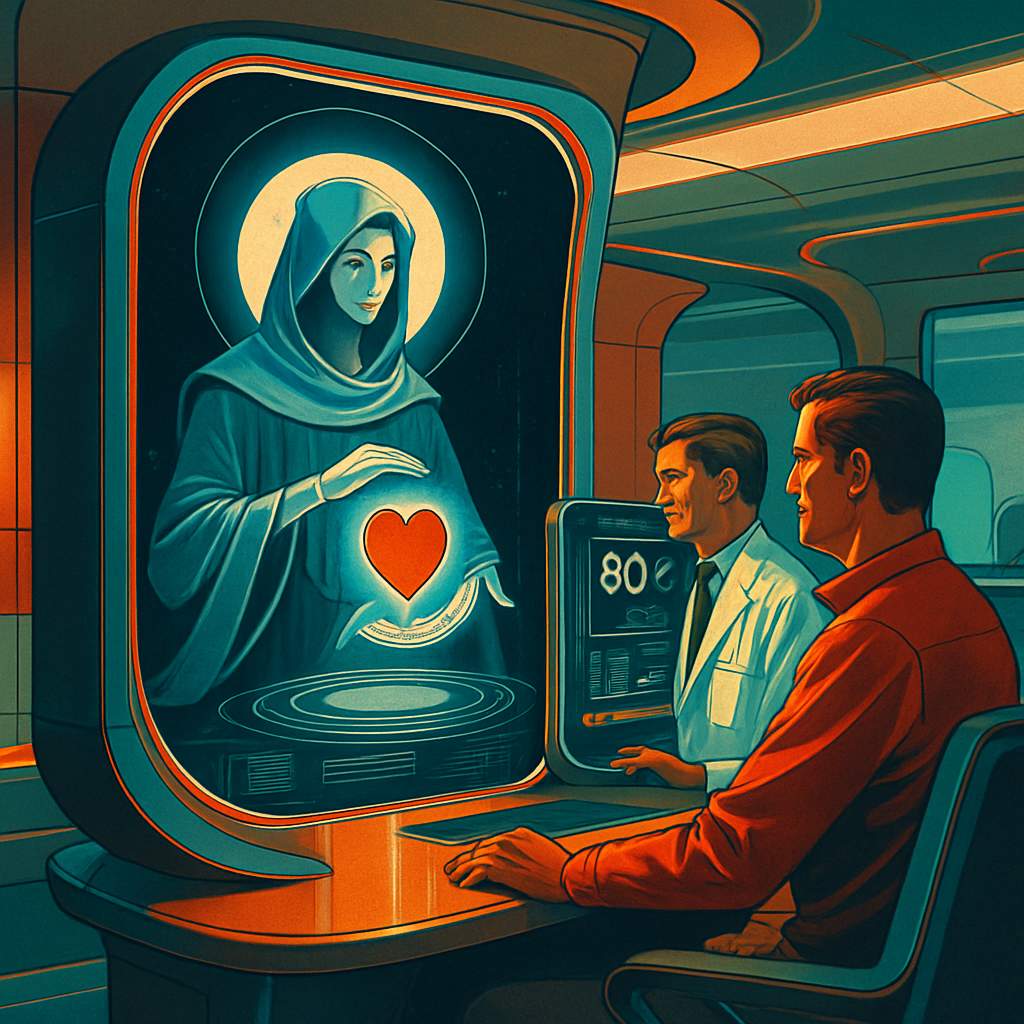
“Can AI help predict which heart-failure patients will worsen within a year?”
“Artificial intelligence may be an essential aid to doctors predicting which patients’ condition could worsen due to heart failure, according to a new study co-authored by MIT researchers.” Well, isn’t that something we all saw coming? AI, the wonder tool of the 21st century, now playing fortune teller for heart patients.
This study is a collaboration between humans and machines, demonstrating once again that there’s more to AI than Siri telling you the weather. The researchers at MIT and the digital health company Eko have devised a tech tool that promises to end long-standing challenges in treating heart failure. Pointing fingers at that office colleague who always seems to be a step ahead, aren’t we?
The focus of attention here is acute decompensated heart failure (ADHF), the kind that requires hospitalization because of severe symptoms and deteriorating conditions. The technology, it is claimed, uses algorithms to predict and detect subtle signals indicating which patients could end up being susceptible to worsening conditions. Life-saving information on demand? Wrap it up, we’ll take two!
In the study involving 1,000 patients, the AI system displayed rather impressive predictive capabilities. Though, we must remember, 1,000 is just a fraction when we consider the total number of heart patients globally. But let’s think big, even if it’s just for a moment.
Now, wait for the catch. While the AI system spews out promising data for heart health, it’s not perfect…yet. The technology was right about 80 percent of the time, which is still 20-percent “uh-oh” moments doctors might have to handle. But in comparison to today’s standard acoustic stethoscopes, it’s like comparing a rowboat to a speedboat.
So, what’s the final say? Is AI the messiah that cardiac care units have been waiting for? It’s too early to tell. There is some promise, yes. But there’s also reason for caution, as relying solely on technology may not be wise.
For now, it’s best to remember that artificial intelligence, like real intelligence, isn’t infallible. My advice? Keep following doctor’s orders. I heard somewhere they went to school for this stuff.