
Dipping Below the Surface: The Hilarious Harmony of Human-Machine Underwater Endeavors
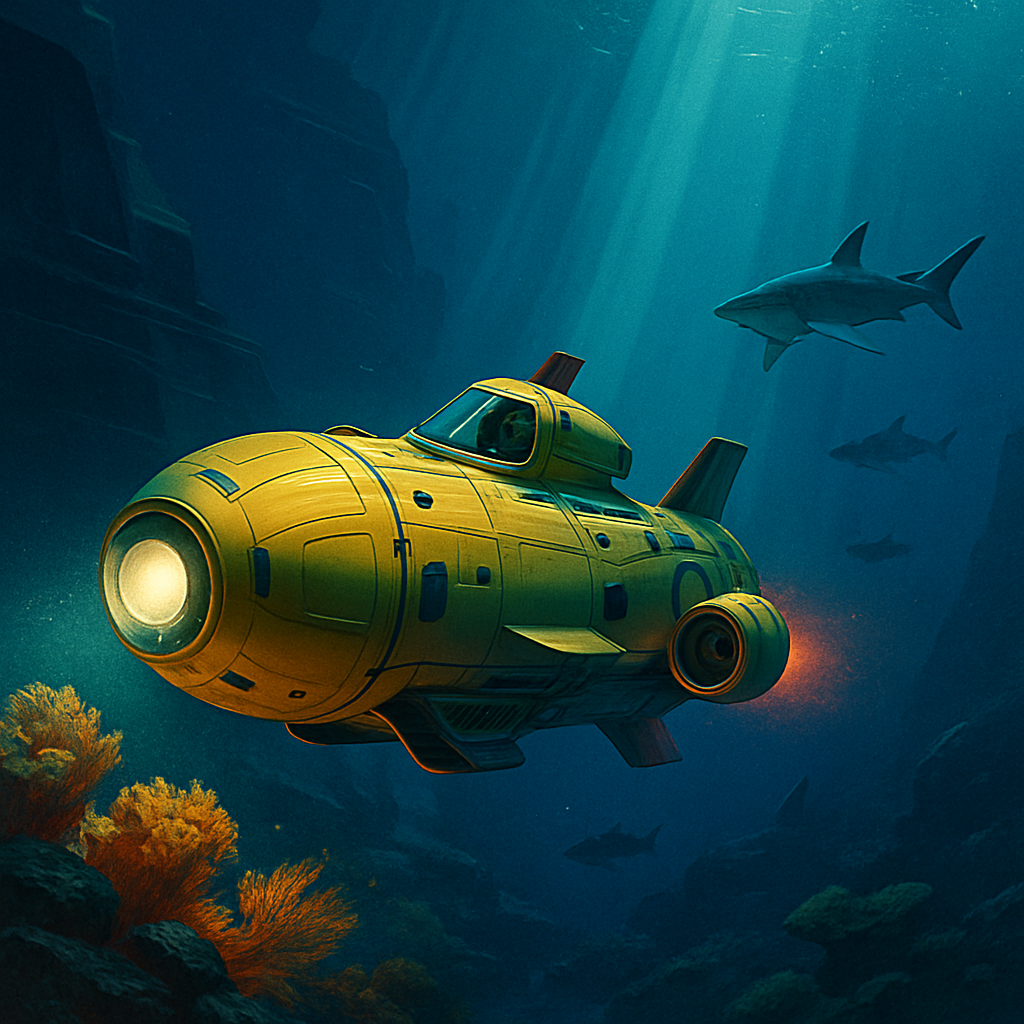
“Human-machine teaming dives underwater”
“Dive technologies’ autonomous underwater vehicle (AUV) carries high-tech sensors and cameras, collects data to create 3-D imaging of the marine world, and returns it back to the operator in a form that’s immediately useful in the company’s eyes”. Oh, isn’t that just like a feel-good movie ending? A machine diving into the unseen depths of the ocean, capturing images straight out of a National Geographic documentary, and gracefully swimming back to the operator. It’s like a hero’s journey, but underwater and with more circuits.
So, let’s talk more about this autonomous undersea adventurer, shall we? This dive machine is being powered by algorithms developed at MIT’s Computer Science and Artificial Intelligence Laboratory (CSAIL). That’s right, algorithms, the secret recipes of the digital age, are guiding this high-tech gadget. Add in machine learning and artificial intelligence, and we’ve got a regular Silicon Valley pool party happening deep under the sea.
Oh, but don’t be fooled, this isn’t just a nerdy engineering marvel (though it totally is). The other half of this tech story belongs to the human factor: operators meticulously trained to work with these adventurous machines. That’s right, these aren’t your average joystick wielding, button-pushing mortal beings. Like a NBA player setting up a perfect game shot or a Michelin-starred chef perfecting a soufflé, these operators harmoniously translate complex data into actionable insights.
But the, shall we say, romance? Yes, the romance between humans and machines does not end here. The collaboration extends to making both human decision-making and machine autonomy better. It’s like that old saying – you scratch my back, and I’ll optimize your data management system for enhanced maritime operations. Words to live by, I assure you.
Because you see, where humans are plagued by fatigue and the perils of subjectivity, machines are there to pick up the slack. They possess the nerve of steel (the aquatic variety) required for complicated missions and have the admirable ability to make sense of complex data, even when the seas get tough.
But don’t worry, this isn’t a fully automated, humans-are-obsolete kind of story. Let’s remember that our underwater heroes are brilliantly guided by algorithms developed by, you guessed it, actual living, breathing humans. The machines are impressive, don’t get me wrong, but they’re like an aspiring actor waiting for the director’s cue before delivering an Oscar-worthy performance.
In this fascinating world of underwater exploration, our human-machine team delivers efficiency and accuracy that could give any seasoned maritime expert a run for their money. So, hats off to this dynamic duo – proving that when it comes to oceanic data collection, two heads (or circuits) are indeed better than one.