
“Customization Charms: How Personalization Features can Add a Jolly Twist to LLMs”
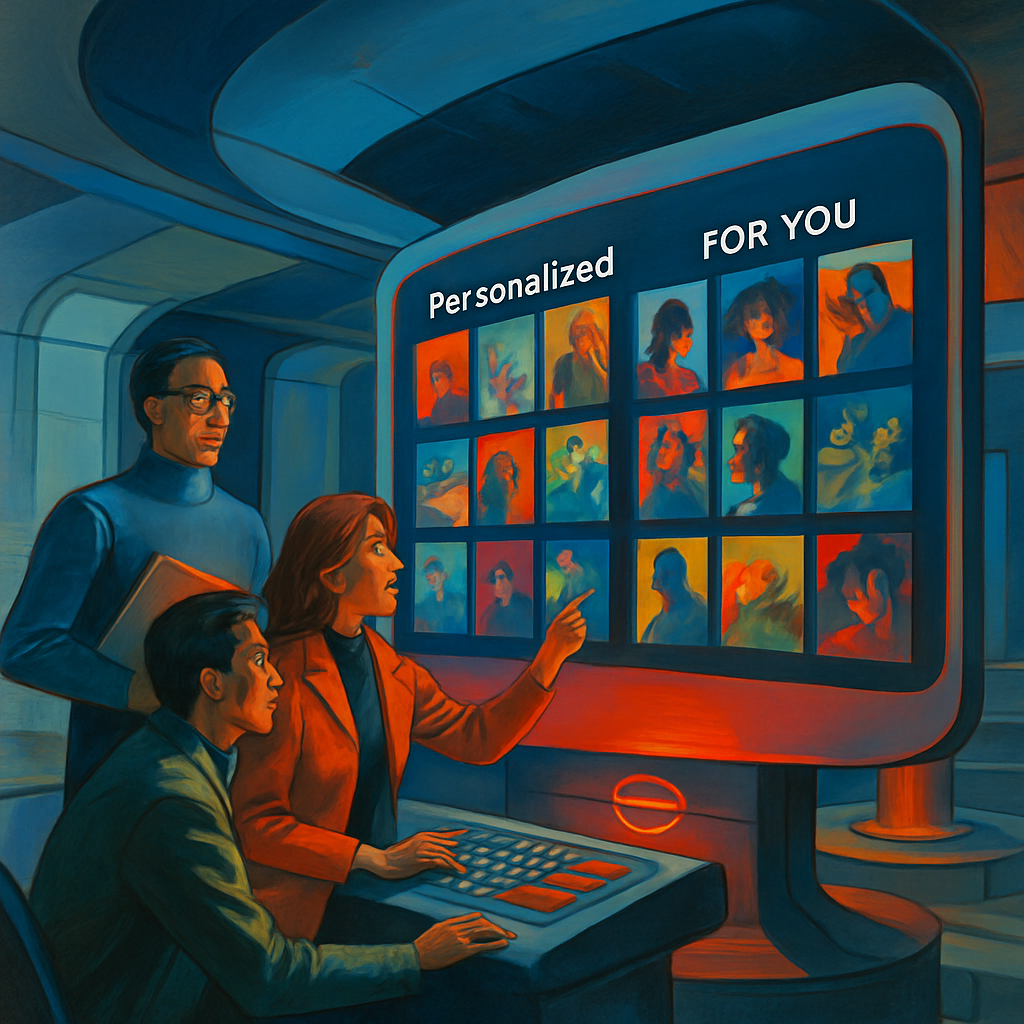
“Personalization features can make LLMs more agreeable”
“In a new paper published in the Proceedings of the National Academy of Sciences, researchers from MIT CSAIL and Stanford University paired off students to showcase how personalization could help machine learning systems be more engaging with people.”
Seemingly, some brilliant minds from MIT and Stanford teamed up to validate what every Netflix subscriber already knows – personalization makes things more engaging. Earth-shattering insight that definitely needed a research paper, right?
With an approach bearing an uncanny resemblance to a stylish duet at a ballroom dance competition, they paired off students to see if machine learning could be made a tad zestier by getting personal. Basically, a perfect blend of speed dating and advanced robotics.
The aim was to create “systems that can better understand and interact with humans.” Probably an easier sell than the “we want to craft robots that could replace your family, friends, and favourite barista” mission statement these tech development projects typically veer towards.
Drawing upon the infinite wisdom of people since time immemorial, they came to the startling conclusion that humans tend to respond better to something that considers their preferences and individual idiosyncrasies. Yes, it appears understanding personal needs and tuning messages accordingly strike a chord with Homo Sapiens. Incredible.
They’ve also uncovered that systems were found to be more agreeable if they provide “a deeper understanding of different ways that users could interact with these systems.” Sorry to burst the bubble, but even a half-witted AI could tell its engagement rates would shoot up if it were more intuitive and user-friendly. It really doesn’t take a bunch of academics to fruitlessly reiterate what’s already obvious, now does it?
Yet, they seem relishingly oblivious to the fact that they’ve done nothing more than unearth the ultimate open secret: Treat users like individuals with specific needs and preferences, and they are more likely to interact positively. Add that to the list of groundbreaking findings along with water being wet and fire being hot.
Nonetheless, it’s comforting to have our intuitions reinforced by the luminaries at MIT and Stanford. After all, nothing lends credibility like a study from some reputed ivory tower. Until next time, don’t forget to customise your goodbyes for a warmer farewell.